
Tennessee Valley Researcher Inducted into the Esteemed National Academy of Medicine
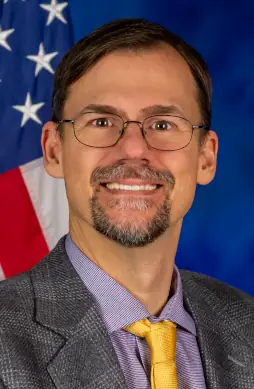 Dr. Michael E. Matheny
Michael Matheny, MD, MS, MPH, research scientist and primary care physician at VA Tennessee Valley Healthcare System (TVHS) has been inducted into the National Academy of Medicine (NAM), recognizing his significant contributions to health care informatics and artificial intelligence (AI).
NAM is one of the highest honors in the fields of health and medicine, serving as a national resource for independent, scientifically-informed analysis and recommendations on health issues. It informs health policy and decision-making in both the public and private sectors.
Matheny’s research focuses on identifying potential risks and complications associated with medical device failures after they have been approved for market use and determines the right course for remedy, ensuring patients get the right care.
“I think it is important to bring a rigorous approach to research projects applying machine learning and artificial intelligence for the challenges at hand,” Matheny said. “Whether it's building population health risk prediction models or using natural language processing to extract critical information from free text, my work as a principal investigator has consistently focused on leveraging these advanced methods to detect safety signals and adverse events in medical device and medication post-market surveillance."
With only up to 100 inductions each year, Matheny’s inclusion not only celebrates his individual achievements but also underscores the exceptional research environment at TVHS. ;
“Dr. Matheny’s election to the National Academy of Medicine is emblematic of the cutting-edge, impactful research in which the high-quality Principal Investigators at TVHS are engaged,” Associate Chief of Staff of Research and Development Dr. Stokes Peebles said. “Dr. Matheny is not only a great researcher in his own right, but also a high-quality mentor to faculty at TVHS which provides the platform for the junior investigators to be successful.”
Matheny earned his undergraduate degree in chemical engineering and medical degree from the University of Kentucky. He completed his residency in internal medicine at St. Vincent’s Hospital, Indianapolis. Matheny then trained at Harvard and MIT , specializing in machine learning, AI, epidemiology, and public health.
Since then, Matheny has been a VA-funded investigator since 2009 and has published more than 240 peer-reviewed scientific articles on acute kidney injury, advanced liver disease, cardiovascular devices and more.
“Dr. Matheny’s research is completely Veteran-based in that it uses CPRS [Computerized Patient Record System] to define mechanisms of diseases and responses to therapies. He performs critical clinical, data-based driven research which makes patient care more effective and safer,” Peebles said.
Matheny, who is also the Director of Center for Improving the Public’s Health Through Informatics at Vanderbilt University Medical Center, began his career in the Consortium for Healthcare Informatics Research (CHIR).
Matheny credits key VA innovations for facilitating his career in informatics, from the multi-decade investments and innovations in electronic health records, to the Office of Research and Development’s investment in the VA Informatics and Computing Infrastructure, which was funded to scale the access and computing capacity for VA research data scientists.
Through his role at NAM, Matheny will have the opportunity to influence the future of health care by contributing his expertise to national discussions, advancing research, and fostering innovation to improve health outcomes for all.
Currently, Matheny is concluding a multi-year project with his partner Dr. Michael Ward , an emergency medicine scientist, to better understand prescribing patterns and adverse outcomes. In another notable effort with the NIH National Heart, Lung, and Blood Institute and partner Frederic Resnic, an interventional cardiology scientist, Matheny has been creating methods to differentiate between device malfunctions and procedural errors in medical device safety surveillance, informing FDA regulatory practices.
Most recently, Matheny and his partner Edward Siew, a nephrology scientist, secured new funding for a project to use AI and machine learning in treating acute kidney injuries, aiming to help providers and patients understand risks and guide clinical decisions.
“This [nomination] is incredibly exciting and it's recognition of the sum product of work that has occurred over multiple research projects with many faculty collaborators, each with their own expertise and vision,” Matheny said. “…It really is rewarding to be a part of that sort of process nationally where research can give back and help Veterans.”
This article originally appeared on VA-Tennessee Valley Health Care website.